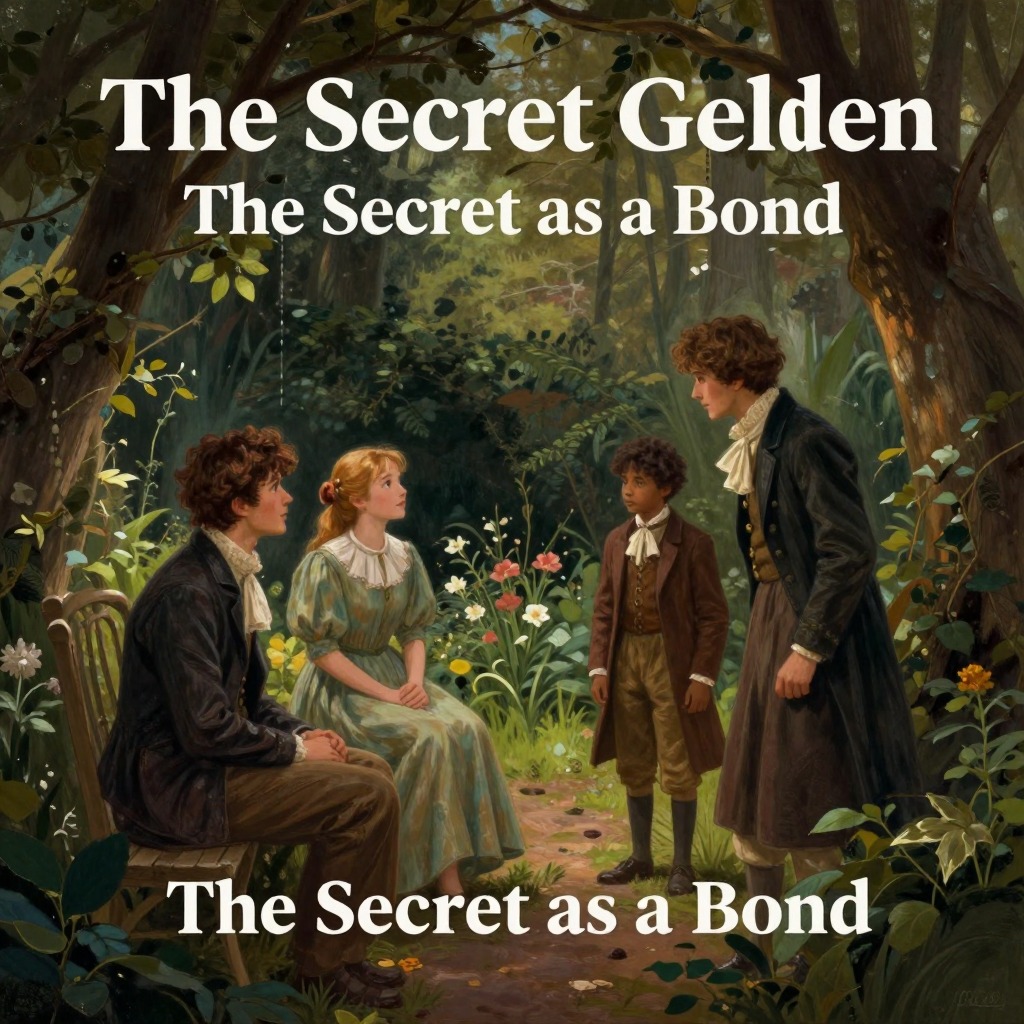
Dickon's Note
Dickon's Note is a small, roughly printed message that Dickon Sowerby leaves for Mary Lennox in the secret garden after their first meeting there. It serves as a tangible promise of his return and a pledge of secrecy, marking the beginning of a partnership rooted in mutual trust and the shared care of the hidden garden.
Appearance and Composition
The note is written on a piece of paper—specifically, a fragment of the letter Mary had printed for Martha to send to Dickon. Dickon fastens it to a standard rose-bush with a long thorn, where Mary discovers it after he has departed. The message consists of two elements: a hand-drawn picture and a short line of text. The drawing depicts a nest with a bird sitting on it, which Martha later identifies as "a picture of a missel thrush on her nest, as large as life an' twice as natural." Beneath the picture, Dickon has printed the words "I will cum bak" in rough letters.
Meaning and Symbolism
Mary immediately understands the note as a message. She realizes that Dickon meant the picture to assure her that he would keep her secret: her garden was her nest, and she was like a missel thrush. The image of the missel thrush on its nest becomes a recurring symbol of safety and confidentiality throughout the story. The misspelled promise "I will cum bak" reinforces Dickon's rustic, unlettered background while underscoring his reliability—he is a "trusty lad" who keeps his word. The note thus transforms a simple piece of paper into a covenant of loyalty, binding the two children to their shared secret.
Narrative Significance
Dickon's Note appears at a crucial moment in the narrative. Mary has just received permission from Mr. Craven to have "a bit of earth" and has rushed back to the garden, only to find Dickon gone. Her fear that he might be "only a wood fairy" who has vanished is dispelled when she discovers the note. It reassures her that he will return, and indeed he does, becoming an indispensable partner in restoring the garden to life. The note also prefigures the larger theme of trust that governs the children's relationships: just as Dickon proves trustworthy with the garden's secret, so too will Colin later be entrusted with it. In this way, the note is a small but potent artifact of the novel's central concern with the power of faith and loyalty among children.